
Range and Cooktop Repair in Houston, TX
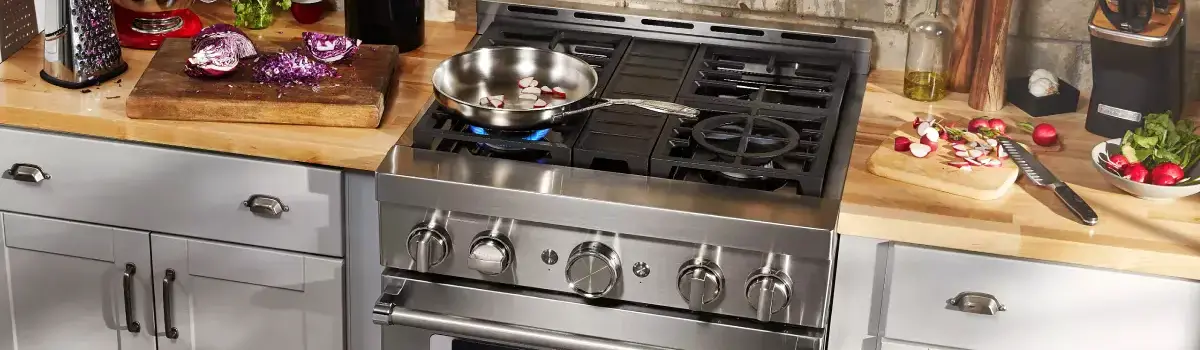
Cooking appliance problems feel different from most kitchen issues because they affect both comfort and safety at the same time. A burner that keeps clicking, a gas smell that comes and goes, an oven that runs hot enough to ruin dinner, or an induction cooktop that shuts off in the middle of cooking is not something people can casually ignore. Even when the appliance still “kind of works,” the kitchen stops feeling normal.
In Houston homes, that stress builds fast. One burner becomes the only one anybody trusts. The oven starts baking unevenly, so meals turn into guesswork. A cooktop may still power on, but nobody feels fully comfortable using it. And when gas, heat, or electrical load are involved, “maybe it’s fine” is not a real plan.
Houston Appliance Repair provides cooktop and range repair in Houston, TX with one clear goal: restore safe, stable, dependable cooking performance — so the appliance behaves normally again, without hesitation, shutdowns, or guesswork. That means a real diagnosis, careful work around finished kitchen surfaces, and verified results before the job is closed: reliable ignition, stable flame, correct element output, accurate oven behavior, and operation that feels normal again.
Need help now? Call (281) 916-3118 or book online. Share the symptom, the brand, and whether the unit is gas, electric, induction, or dual-fuel, and the visit can be routed correctly from the start.
Cooktops & Ranges We Service
These appliances may look similar on the surface, but the way they fail depends heavily on fuel type, control system, and installation style.
Appliance types serviced include:
- gas cooktops
- gas ranges
- sealed-burner gas cooktops
- electric coil cooktops
- radiant smooth-top electric cooktops
- glass-top electric ranges
- induction cooktops
- induction ranges
- dual-fuel ranges
- slide-in ranges
- freestanding ranges
- built-in cooking surfaces
If the exact model is not handy, a quick photo of the model tag inside the oven frame, drawer area, or underside label is usually enough.
Brands We Repair — Residential, Premium & Commercial
Houston kitchens use a wide range of cooking appliances, from everyday household ranges to premium built-in platforms and commercial cooking equipment.
Common household brands: Whirlpool, GE, Frigidaire, KitchenAid, Samsung, LG, Maytag, Amana, Hotpoint, Kenmore, and others.
Premium and luxury brands: Thermador, Wolf, Viking, JennAir, Monogram, Bosch, Miele, Dacor, Fisher & Paykel, Gaggenau, Bertazzoni, and similar high-end platforms.
Commercial cooking brands: Vulcan, Southbend, Garland, Imperial, Bakers Pride, Blodgett, and other commercial cooking platforms where applicable.
If your brand is not listed, that does not make the problem unusual. Fuel type, platform, and the actual symptom usually matter more than a short checklist of names.
What Homeowners Usually Notice First
Most cooktop and range problems do not start as total failure. They start as trust problems.
- the burner clicks too long before lighting
- one burner lights only sometimes
- the flame looks weak, uneven, or the wrong color
- an electric burner heats too slowly or too aggressively
- the induction surface stops mid-cook
- the oven preheats, but food still comes out wrong
- the range trips the breaker
- the appliance smells hot or electrical
- the controls respond, but cooking no longer feels predictable
That is why a strong service page should not just say “cooktop repair” or “range repair.” It should reflect the actual things homeowners live with before they decide to call.
Why Cooking Appliance Problems Feel More Serious
A dishwasher can disappoint you. A dryer can slow you down. But a cooktop or range changes how safe the kitchen feels.
If a burner does not ignite correctly, people hesitate before using it. If the flame looks wrong, nobody wants to trust it with a full meal. If induction keeps cutting out, even boiling water becomes annoying. If the oven temperature drifts badly, the appliance becomes frustrating even though it technically still works. And if the range smells electrical or trips the breaker, most homeowners stop using it altogether.
That is why proper cooktop and range repair should not stop at “it turned on once.” The goal is a kitchen appliance that feels dependable again — safe to use, stable under normal cooking, and predictable from one meal to the next.
Real-World Cooktop & Range Problems
Gas Burner Won’t Ignite / Clicking Does Not Stop
This is one of the most common service calls because it feels half-working. The burner clicks but does not light. Or it lights late. Or it ignites only after repeated attempts. Sometimes it lights and then goes out again. Other times the clicking keeps going long after it should stop.
To a homeowner, it feels random. In reality, it usually follows a pattern: spillovers, grease film, moisture from cleaning, burner misalignment, clogged ports, or ignition wear interfering with a clean spark path. In many cases, ignition failure is not a lack of gas, but a disrupted spark path that cannot consistently bridge to the gas-air mixture when the burner is cold.
Common causes include:
- boilovers and grease buildup around the burner base
- moisture after cleaning or heavy cooking
- clogged burner ports
- burner cap or head not seated correctly
- worn ignition components or weak spark behavior
What a proper repair should accomplish:
Reliable ignition from a normal start, not just one lucky light-off during a quick test. Spark, burner alignment, gas flow, and flame stability all need to work together — verified under real use, not just powered on.
Gas Smell / Weak Flame / Flame Looks Wrong
Any gas odor should be taken seriously. Sometimes the first clue is not the smell itself but the way the flame looks or sounds. It may appear weak, lazy, overly orange, uneven, or unstable around the ring. In some cases, the burner is louder than normal or behaves differently from the others.
That kind of problem is not always “just dirty.” Flame quality depends on proper seating, clean burner paths, correct air-fuel behavior, and stable control of the burner itself. Even small changes in airflow around the burner can shift combustion behavior enough to create odor, noise, or unstable flame patterns.
Common causes include:
- burner head or cap seated incorrectly
- grease buildup affecting flame path
- clogged or uneven burner ports
- airflow disruption around the cooking surface
- valve or regulation behavior drifting off normal
What a proper repair should accomplish:
Safe ignition, stable flame, and burner performance that looks right and sounds right. If there is a safety issue, it should be identified clearly and handled seriously.
Electric Cooktop Not Heating Correctly
Electric cooking surfaces fail differently than gas. A burner may stay cold, heat only part of the way, cycle unpredictably, or behave in a way that no longer matches the setting on the control. Some homeowners describe it as “it still gets hot, but not right.”
That usually points to an output problem, not just a preference issue. On many electric platforms, this starts showing up when switching components or internal connections begin to heat up and lose stability under load. The burner may be underheating, overheating, or losing consistency during use.
Common causes include:
- heat-stressed wiring connections
- failing surface element behavior
- relay or control switching problems
- repeated high-heat use stressing components
- cookware mismatch affecting performance on smooth tops
What a proper repair should accomplish:
Heat output should behave the way the burner is supposed to behave — not just glow a little or get warm enough to create doubt.
Induction Cooktop Shuts Off / Won’t Detect Pan / Error Behavior
Induction is fast and precise, but it is also less forgiving when cooling, sensors, power quality, or cookware conditions are off. Some homeowners see the cooktop fail to detect pans. Others see it stop mid-cook or throw intermittent fault behavior that comes and goes.
Because induction is so dependent on correct platform behavior, this is not the kind of issue that should be reduced to “maybe it’s the pan” without actually proving it. Induction platforms are designed to protect their power stages, so when cooling, airflow, or temperature sensing falls outside normal range, the system will shut down even if the user-facing controls appear normal.
Common causes include:
- incompatible or warped cookware
- restricted cooling airflow
- tight cabinet conditions trapping heat
- repeated use on boost mode stressing the system
- brief outages or surge-related power events
What a proper repair should accomplish:
Stable operation, consistent pan detection, and cooking that continues normally without random shutdowns.
Oven Not Heating Evenly / Runs Too Hot or Too Cool
This is one of the most frustrating range problems because the oven usually still appears to work. It preheats. The display looks normal. The light turns on. But the food tells the truth.
Cookies brown too fast on one side. Roasts take longer than they should. Baked dishes finish unevenly. The oven overshoots temperature and turns recipes into guesswork. Or it runs cool enough that everything takes longer and still comes out wrong. Small sensor drift or airflow imbalance inside the cavity can easily translate into a real-world temperature error, even when the display looks correct.
Common causes include:
- sensor drift
- weak bake or broil performance
- door seal leakage
- airflow disruption inside the oven cavity
- foil placement interfering with heat movement
- control behavior no longer matching real oven temperature
What a proper repair should accomplish:
The oven should not just heat — it should cook predictably. Real temperature behavior matters more than the number on the display.
Range Trips Breaker / Smells Electrical / Sparks
This is a stop-and-check issue, not a “watch it and see” issue. If the range trips the breaker, smells electrically hot, or shows signs of arcing or unstable power behavior, the problem should be taken seriously.
In many cases, these issues build gradually. A terminal loosens. Heat cycles stress wiring. A component begins failing under load. What starts as one nuisance trip can become a real safety problem. High-current cooking appliances are especially sensitive to heat-loosened connections, which can behave normally when cold and fail only after sustained use.
Common causes include:
- loose terminal connections
- heat-stressed wiring
- damaged cord or connection points
- failing heating components
- stressed control switching
- power-event damage after outages or surges
What a proper repair should accomplish:
The fault needs to be isolated safely, corrected properly, and verified under real use. “It works unless you use it too long” is not an acceptable finish line.
What We Repair
Common cooktop and range repair issues include:
- gas ignition problems
- continuous clicking
- delayed lighting
- unstable flame behavior
- weak or uneven burner flame
- clogged burner ports
- electric surface element failures
- inconsistent heat output
- induction pan-detection problems
- induction shutdowns and fault behavior
- oven temperature drift
- uneven baking
- no-heat or weak-heat oven problems
- door seal and heat-retention issues
- control and safety logic issues
- wiring and connection faults
- breaker trips and electrical-smell problems
What a Proper Cooktop or Range Repair Should Feel Like
After a correct repair, the appliance should feel dependable again in ways the homeowner can actually notice:
- gas burners should ignite without hesitation
- clicking should stop when it should
- flame should look stable and even
- electric elements should heat at the expected level
- induction should recognize cookware and stay running normally
- the oven should cook more predictably
- the appliance should not smell hot or act uncertain
- everyday cooking should feel normal again instead of cautious and improvised
That is a better benchmark than simply saying the appliance “works.”
How Service Works
1. Start with the symptom
Clicking, no ignition, weak flame, uneven heat, induction shutdowns, oven temperature drift, electrical smell, or breaker trips.
2. Match the appliance correctly
Gas, electric, induction, or dual-fuel. Cooktop, slide-in range, freestanding range, or built-in cooking surface.
3. Diagnose the actual failure
Ignition path, burner performance, element output, induction cooling, oven temperature behavior, wiring condition, or safety-related control issue.
4. Approve the repair clearly
A written estimate comes first, with a straightforward explanation of what failed and what is needed.
5. Confirm safe, stable operation
Ignition, flame quality, heat output, and oven behavior should make sense before the job is closed.
Genuine OEM Parts — When Replacement Is Actually Needed
Cooktops and ranges rely on correct ignition parts, burners, sensors, relays, elements, switches, valves, and control behavior. On premium, induction, and dual-fuel platforms especially, an off-spec part can create repeat faults, unstable temperature behavior, or safety concerns that return later.
When a component truly needs replacement, genuine OEM parts are prioritized whenever possible and matched by model and serial whenever available.
Why Homeowners Choose Houston Appliance Repair
A cooking appliance problem changes the mood of the kitchen faster than most appliance issues. That is why service should feel calm, careful, and exact.
The goal is not to create drama around a burner that clicks or an oven that runs off temperature. The goal is to figure out why the appliance stopped behaving normally, correct the actual cause, and restore a kitchen that feels safe and dependable again.
That means:
- real diagnosis instead of part-swapping guesses
- clean, respectful work around cabinetry, glass surfaces, and finished kitchen spaces
- clear explanation before repair begins
- verified ignition and heat behavior before the visit is closed
- experience across everyday, premium, gas, electric, induction, and dual-fuel platforms
A cooktop or range should not leave anyone guessing whether dinner will cook normally or whether using the appliance is a bad idea.
FAQ — Cooktop & Range Repair in Houston, TX
Q: Why does a gas burner keep clicking without lighting?
A: Most often because the ignition path is being interrupted by moisture, spillover residue, clogged burner ports, burner misalignment, or worn ignition components.
Q: Is a yellow or orange gas flame always a bad sign?
A: Not always, but it can point to combustion, burner seating, airflow, or contamination issues that should be checked.
Q: Why does my induction cooktop stop mid-cook?
A: Common causes include cooling problems, pan-detection issues, heat stress, power events, or platform-specific fault behavior.
Q: Why is my oven temperature off even though it still heats?
A: That often comes from sensor drift, weak bake or broil output, door sealing problems, or control behavior that no longer reflects the real oven temperature.
Q: Do cooktop and range repairs happen on site?
A: Yes. Most repairs are completed in the home. If a special-order part is needed, the next step is explained clearly before moving forward.
Houston Areas & ZIP Codes
- Katy
- Sugar Land
- The Heights
- Bellaire
- Westchase
- Cypress
- Clear Lake
- Downtown
- Uptown
- Kingwood
- Memorial
- Midtown
- Pasadena
- Pearland
- River Oaks
- The Woodlands
- Washington Corridor
- West University
Schedule Cooktop & Range Repair in Houston, TX
If the burner is not igniting correctly, the flame looks wrong, the oven is cooking unpredictably, or the appliance no longer feels safe or dependable, it is time to correct the real cause.
Call Houston Appliance Repair at (281) 916-3118 or book online. Share the symptom, the brand, and whether the appliance is gas, electric, induction, or dual-fuel, and the visit can be routed correctly from the start.