
Dishwasher Repair in Houston, TX
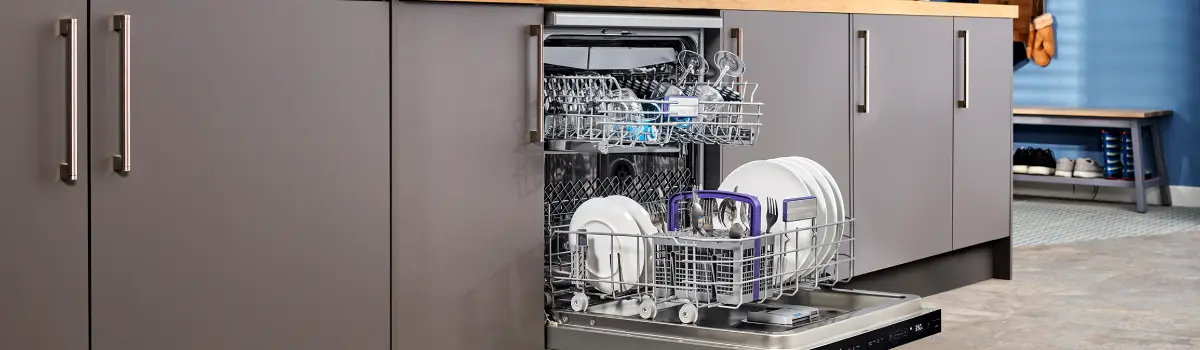
A dishwasher problem usually does not start with total failure. It starts with a result you stop trusting.
Glasses come out cloudy. Plates still have grit on them. Water sits in the bottom after the cycle. The machine runs, but the load does not feel clean, dry, or finished. Then what should be one of the easiest parts of the kitchen routine turns into extra work every day.
Houston Appliance Repair provides dishwasher repair in Houston, TX with one clear goal: restore real wash performance — correct fill, real spray pressure, complete draining, proper rinse behavior, and a finished load that feels usable again. Not just a machine that powers on. Not just a cycle that “kind of runs.” A dishwasher that actually does its job.
Need help now? Call (281) 916-3118 or book online. Share the symptom, the brand, and the dishwasher style — built-in, panel-ready, compact, or drawer-style — and the visit can be routed correctly from the start.
What Dishwasher Problems Usually Mean
A dishwasher is not just a tub with water in it. To work correctly, the machine has to complete a sequence that stays in balance:
- fill with the right amount of water
- circulate with real wash pressure
- spray the load correctly
- drain at the right time
- rinse cleanly
- dry in a way that matches the platform
That is why dishwasher repair should not stop at “it ran a cycle.” The finish line is a machine that fills, washes, drains, rinses, and dries in a way that feels normal again.
Dishwasher Types We Service
Different dishwasher platforms fail differently, especially once installation style, cabinet fit, and wash-system design come into play.
Dishwasher types serviced include:
- standard built-in dishwashers
- panel-ready / integrated dishwashers
- compact dishwashers
- 18-inch dishwashers
- drawer-style dishwashers
- high-efficiency dishwasher platforms
- hard-food disposer systems
- filter-based dishwasher systems
- select premium and specialty built-in dishwashers
If the exact model is not handy, a quick photo of the model tag inside the door is usually enough.
Brands We Repair — Everyday + Premium
Houston kitchens use everything from standard household dishwashers to premium integrated platforms.
Common household brands: Whirlpool, GE, Frigidaire, KitchenAid, Maytag, Samsung, LG, Amana, Kenmore, and similar residential dishwashers.
Premium and built-in platforms: Bosch, Thermador, JennAir, Miele, Monogram, and similar integrated dishwasher systems.
If your brand is not listed, that does not make the problem unusual. Wash-system design, drain behavior, drying method, and the actual symptom pattern usually matter more than a short brand list.
What Homeowners Usually Notice First
Most dishwasher failures begin as drift, not death.
- water left in the bottom
- dishes still dirty after a normal cycle
- cloudy glasses or white film
- grit or fine debris on dishes
- weak drying or constantly wet plastics
- sour or damp smell inside the tub
- leaking near the door or under the cabinets
- beeping, pausing, or stopping mid-cycle
- a dishwasher that still runs, but no longer feels trustworthy
That is why a strong service call should start with the real behavior of the machine — not just the model number and not just the last flashing light.
Where Dishwasher Performance Usually Breaks Down
1. Water is not moving through the system correctly
The dishwasher may fill, but not circulate with enough pressure or the right spray pattern.
2. The drain side is no longer clearing the machine properly
Then water stays behind, smells build up, and cycle logic starts getting unstable.
3. Rinse and dry behavior drift off
The machine may technically finish, but the load still comes out cloudy, wet, or unusable.
4. The dishwasher starts reacting to conditions it does not trust
Latch checks, water-level checks, drain timing, and heat response can all interrupt the cycle.
That is why dishwasher repair needs sequence logic, not just a part swap.
Real-World Dishwasher Problems
Water Left in the Bottom / Not Draining Properly
This is one of the most common dishwasher complaints because it leaves both a visible mess and a bigger question: is the machine safe to run again, or is the next cycle just going to make it worse?
Sometimes there is obvious standing water. Sometimes it is only enough to leave odor, residue, and a dirty feeling inside the tub. In other cases, the dishwasher stops mid-cycle because the machine expected the water to clear and it did not.
Common causes include:
- food debris blocking filters or sump areas
- sludge and grease buildup in the drain path
- kinked or poorly routed drain hose
- missing high loop
- disposal-side setup problems
- drain-pump behavior that no longer clears the machine fully
What needs to be verified:
Not just whether the visible water goes down once, but whether the machine drains correctly through a real cycle and clears the tub the way it should every time.
What a proper repair should accomplish:
A drain path that makes sense, clears fully, and does not leave yesterday’s water sitting in the machine tomorrow.
“It Started After a New Garbage Disposal Was Installed”
This problem shows up often enough to deserve its own section. The dishwasher worked. A new disposal was installed. Then the dishwasher started leaving water behind or backing up.
That often means the issue is setup-related, not a mystery dishwasher failure.
Common causes include:
- disposal inlet plug not removed
- drain hose rerouted incorrectly
- missing or too-low high loop
- loose connection or clamp issue
- backflow behavior after plumbing changes
What needs to be verified:
The full drain path from dishwasher to disposal or drain connection, not just the tub itself.
What a proper repair should accomplish:
A dishwasher that drains cleanly again because the entire drain setup works the way the platform expects.
Dishes Still Dirty / Weak Wash Pressure
This is the dishwasher version of “it turns on, but it is not really doing the job.” The machine runs, water moves, there is noise, but the result feels closer to a rinse than a wash.
Homeowners often blame detergent first, but the real issue is usually circulation, wash pressure, spray-arm flow, sump condition, or water that never reaches proper working temperature.
Common causes include:
- blocked spray-arm ports
- labels, seeds, and debris interfering with spray flow
- filter and sump buildup
- weak circulation behavior
- poor loading patterns blocking wash coverage
- wash water not reaching the right operating condition
What needs to be verified:
Whether the machine is actually washing with real pressure and usable spray pattern — not just making normal dishwasher noise.
What a proper repair should accomplish:
A dishwasher that actually cleans the load again instead of simply moving water around.
Cloudy Glassware / White Film / Grit
This is one of the most frustrating dishwasher complaints because the machine still appears functional, yet everything coming out of it looks worse.
Cloudy glasses, dusty plates, white film, and recurring grit usually mean the dishwasher is no longer filtering, rinsing, or circulating the way it should. Sometimes water conditions play a role. Often the issue is a combination of filtration, rinse behavior, circulation, and wash temperature drift.
Common causes include:
- mineral residue buildup
- rinse aid not feeding or set incorrectly
- too much detergent or the wrong detergent type
- clogged filters recirculating debris
- weak wash flow
- poor final-rinse behavior
- low water temperature during wash or rinse stages
What needs to be verified:
Not just that the glasses look bad, but why the machine is no longer leaving the load clean and clear.
What a proper repair should accomplish:
Cleaner wash flow, better rinse behavior, and a machine that improves the condition of the load instead of slowly coating everything in haze.
Not Drying Properly / Steam but No Real Drying
A dishwasher can finish the cycle and still leave the load feeling incomplete. The dishes are hot, there is steam, but everything is still wet. Plastic items hold puddles. The door opens and the load still feels unfinished.
Not every dishwasher dries the same way, so this has to be judged by platform. But if drying performance suddenly dropped, something changed in the machine’s final-stage behavior.
Common causes include:
- rinse aid empty or not feeding correctly
- heater or sensor drift
- vent behavior issues
- seal-related moisture retention
- weak final-rinse behavior
- drying system no longer performing the way the platform expects
What needs to be verified:
Whether the machine is actually reaching and completing the drying stage the way it should for that model.
What a proper repair should accomplish:
A load that feels usable at the end of the cycle — not one that still needs hand-drying across half the rack.
Leaks — Door, Under the Unit, or After the Cycle
Dishwasher leaks are stressful because they often stay hidden longer than other appliance leaks. A slow leak can affect cabinetry, flooring, toe-kicks, and subfloors long before it becomes obvious.
The real question is not only where the water appears. It is when it appears.
Does it leak during fill? During wash pressure? During drain? After the cycle ends?
Common causes include:
- door gasket wear
- alignment issues at the door
- oversudsing from incorrect soap
- loose or cracked connections under the unit
- drain-side backflow
- pressure-related leak paths that show up only during active wash
What needs to be verified:
The exact leak phase and the actual path the water is taking — not just the spot where the puddle is found.
What a proper repair should accomplish:
A dishwasher that stays dry around the base and inside the cabinet through a controlled cycle, not just a machine that “didn’t leak this one time.”
Won’t Start / Beeps / Stops Mid-Cycle
Some dishwashers refuse to start. Others begin normally, then stop halfway through, pause, beep, or behave like they no longer trust the cycle.
That usually means the machine is reacting to a condition it does not like: latch confirmation, water level, drain timing, heat response, or another logic checkpoint in the cycle.
Common causes include:
- door latch not confirming properly
- drain behavior not clearing in expected time
- float or water-level issue
- power or outlet inconsistency
- cycle logic reacting to another hidden performance problem
What needs to be verified:
Not just the beeping or pause, but the specific point in the sequence where the dishwasher stops trusting the cycle.
What a proper repair should accomplish:
A machine that starts, runs, drains, and finishes predictably again instead of acting unreliable every few loads.
What We Repair
Common dishwasher repair issues include:
- standing water and drain failures
- disposal-related drain setup problems
- weak wash pressure and poor circulation
- cloudy glasses, white film, and grit
- drying problems
- vent and rinse behavior issues
- leaks and hidden water-path problems
- latch and cycle-interruption issues
- filter and sump-related wash problems
- heating, rinse, and final-cycle performance drift
- panel-ready, compact, and specialty built-in dishwasher issues
What “Fixed” Should Actually Mean
After a correct dishwasher repair, the machine should feel dependable again in ways the homeowner can actually notice:
- the cycle should start normally
- water should not remain in the bottom
- dishes should come out cleaner, not dirtier
- glasses should improve instead of getting cloudier
- the dishwasher should not leave a sour smell behind
- drying should feel more usable and consistent
- the base area should stay dry
- the machine should feel like part of the kitchen routine again, not another thing to watch
That is a better standard than “the lights came on.”
How the Call Moves
1. Start with the symptom
Standing water, poor cleaning, cloudy glasses, weak drying, leaks, beeping, or a cycle that keeps stopping.
2. Match the dishwasher correctly
Built-in, panel-ready, compact, drawer-style, or specialty platform.
3. Diagnose the actual failure path
Drain behavior, circulation, spray pattern, filter system, heating, drying logic, leak source, latch logic, or installation-related issue.
4. Approve the repair clearly
A written estimate comes first, with a straightforward explanation of what failed and what is needed.
5. Confirm real cycle behavior
Fill, wash, drain, rinse, and drying performance should make sense before the job is closed.
Genuine OEM Parts — When Correct Dishwasher Behavior Matters
Dishwashers depend on correct pumps, heaters, seals, valves, sensors, and control behavior. On premium and built-in platforms especially, an off-spec part can create repeat drain issues, weak drying, unstable wash behavior, or another round of frustration a few days later.
When replacement is truly needed, genuine OEM parts are prioritized whenever possible and matched by model and serial whenever available.
Why Homeowners Choose Houston Appliance Repair
A dishwasher problem may look small next to a refrigerator failure, but the frustration builds fast when it touches every meal, every cleanup, and every kitchen routine.
That is why service should feel calm, exact, and useful.
That means:
- a real diagnosis instead of guesswork
- clean, respectful in-home service
- clear explanation before repair begins
- real cycle verification before the job is closed
- experience across both everyday and premium dishwasher platforms
A dishwasher should not leave you wondering whether tonight’s load will come out clean, wet, gritty, or half-finished.
FAQ — Dishwasher Repair in Houston, TX
Q: Do dishwasher repairs happen in the home?
A: Yes. Most dishwasher repairs are completed on site. If a special-order part is needed, the next step is explained clearly before moving forward.
Q: Why is there water sitting in the bottom?
A: Most often, that points to a drain restriction, hose-routing issue, disposal setup problem, or drain-pump behavior that is no longer clearing properly.
Q: Why are dishes still dirty even with good detergent?
A: Usually because wash performance has dropped — circulation, spray-arm flow, filtration, or wash-stage heat behavior is no longer where it should be.
Q: Why did drying suddenly get worse?
A: Drying problems often come from rinse-aid behavior, heater or sensor drift, venting, or seal-related moisture issues.
Q: Is a dishwasher leak urgent?
A: Yes. Even a slow leak can damage cabinets and flooring over time.
Q: Do panel-ready and compact dishwashers get repaired too?
A: Yes. Built-in, panel-ready, compact, and select specialty dishwasher platforms are all part of regular service work.
Houston Areas & ZIP Codes
- Katy
- Sugar Land
- The Heights
- Bellaire
- Westchase
- Cypress
- Clear Lake
- Downtown
- Uptown
- Kingwood
- Memorial
- Midtown
- Pasadena
- Pearland
- River Oaks
- The Woodlands
- Washington Corridor
- West University
Schedule Dishwasher Repair in Houston, TX
If the dishwasher is leaving water behind, washing weakly, drying poorly, leaking, or turning everyday cleanup into a second round of handwashing, it is time to correct the real cause.
Call Houston Appliance Repair at (281) 916-3118 or book online. Share the symptom, the brand, and the dishwasher style, and the visit can be routed correctly from the start.