Сommercial Appliance Repair in Houston,TX
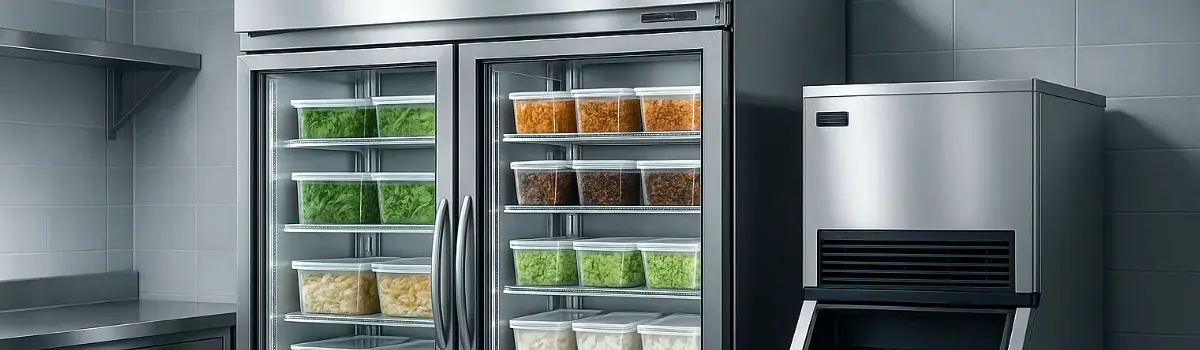
In a home, appliance failure is frustrating. In a business, it becomes operational damage fast.
A reach-in starts running warm. Ice production drops during the lunch rush. A prep table loses temperature on the rail. A dishwasher stops finishing cycles. A fryer trips in the middle of service. A commercial oven recovers too slowly. Staff begin working around the problem, product starts getting watched more closely, and one equipment issue turns into slower tickets, wasted labor, lost product, and a service flow that no longer feels controlled.
That is why commercial equipment cannot be approached like residential equipment. It runs longer, harder, hotter, and under more abuse. Doors open constantly. Airflow gets compromised faster. Drains take on grease and debris. Refrigeration works against kitchen heat. Warewashing gets pushed through repeated loads. Cooking equipment is judged not by whether it turns on, but by whether it holds up under actual production.
Houston Appliance Repair provides commercial appliance repair in Houston, TX with one clear priority: restore equipment to safe, stable, usable working performance as quickly and correctly as possible. Not just restart the unit. Not just clear the code. Not just get it through another hour. The goal is to identify the real failure path, correct it cleanly, and verify that the equipment is truly back in service.
Need service now? Call (281) 916-3118 or book online. Tell us what equipment is down, what it is doing, and what kind of operation it supports — restaurant, café, bar, bakery, office kitchen, hospitality, or food service — and the call can be routed correctly from the start.
Commercial Environments We Commonly Support
Commercial equipment lives inside different kinds of pressure depending on the business around it. The failure pattern in a coffee bar is different from the failure pattern in a prep kitchen, a hotel, or an office pantry.
Service environments commonly include:
- restaurants
- cafés
- bars
- bakeries
- commercial kitchens
- hospitality operations
- office kitchens and breakrooms
- convenience and beverage service areas
- catering prep spaces
- food-service support operations
That matters, because a machine that is “technically running” may still be unusable in one environment and barely acceptable in another.
Commercial Equipment We Service
Commercial repair only works well when equipment is routed by platform, duty type, and real operating behavior — not just by a broad label.
Refrigeration & Cold Holding
- reach-in refrigerators
- reach-in freezers
- undercounter refrigerators
- prep tables and sandwich units
- beverage coolers
- bottle coolers
- bar refrigeration
- display merchandisers
- walk-in cooler component-related issues
- walk-in freezer component-related issues
- kegerators where applicable
Ice & Beverage Equipment
- commercial ice machines
- cube ice machines
- nugget ice machines
- flaker ice machines
- undercounter ice makers
- ice bins and dispensers
- beverage cooling equipment
- filtration and water-flow related ice systems
Cooking Equipment
- commercial ovens
- convection ovens
- commercial ranges
- griddles
- charbroilers
- salamanders
- fryers
- warmers and holding cabinets
Warewashing & Sanitation
- commercial dishwashers
- undercounter dishwashers
- door-type dishwashers
- glass washers
- fill, heat, wash, drain, and cycle-completion related issues
Laundry & Utility Equipment
- commercial washers where applicable
- commercial dryers where applicable
If you are not sure what category your equipment falls into, that is fine. A photo of the data plate, front panel, or model label plus a quick description of the failure is usually enough to identify the platform correctly.
Commercial Brands We Commonly Service
Commercial equipment varies by category, so brands matter most when tied to the actual equipment platform.
Refrigeration and ice platforms commonly include: True, Turbo Air, Traulsen, Beverage-Air, Hoshizaki, Manitowoc, Scotsman, Atosa, Avantco, Delfield, and similar commercial systems.
Cooking equipment commonly includes: Vulcan, Southbend, Garland, Imperial, Bakers Pride, Blodgett, and related commercial lines.
Warewashing platforms commonly include: Hobart, Jackson, CMA Dishmachines, and similar commercial dishwashing systems.
If your brand is not listed, that does not make the equipment unusual. In commercial service, the real key is matching the platform, the duty environment, and the failure behavior correctly.
What Commercial Failure Actually Looks Like
Commercial equipment usually does not fail in a dramatic movie scene. It fails in ways that operators feel immediately:
- a unit is technically on, but not holding temperature
- recovery gets slower and slower during service
- output drops under demand
- a machine works while idle, then struggles when the rush starts
- drain or leak issues keep coming back
- a dishwasher completes some loads, then stalls
- heating equipment runs, but not at production pace
- managers or staff lose trust in the unit before it fully dies
That is why a real commercial service page should talk about performance under load, not just “repair.”
The Four Commercial Failure Patterns That Matter Most
1. The equipment runs, but can no longer keep up
This is the most dangerous kind of commercial failure because it looks partly alive while the operation is already losing time.
2. Recovery speed collapses
The machine may hit temperature or complete one cycle, but not at the pace the business needs.
3. Drainage, airflow, or heat-release conditions break down
This is common in refrigeration, ice, warewashing, and even cooking equipment.
4. Controls look normal while real operating behavior falls apart
Error codes matter, but so do equipment conditions that have not yet thrown one.
That is why commercial repair needs more than troubleshooting. It needs return-to-service logic.
Real-World Commercial Equipment Problems
Refrigeration Not Holding Temperature
This is one of the most common and most expensive commercial failures because product temperature drift affects food safety, prep flow, and service speed quickly. A reach-in may still be cold near the fan but warm in usable zones. A prep rail may fail first while the lower cabinet still seems acceptable. A beverage unit may run constantly and still lose hold during peak opening cycles.
What matters here is not just “cold or not.” It is whether the equipment can recover after door openings, hold under ambient heat, and return product zones to safe working temperature.
Common causes include:
- condenser coils loaded with grease and dust
- equipment installed too tight to walls or line equipment
- blocked airflow from overstocking
- torn gaskets from heavy daily use
- fan weakness that shows up under service conditions
- ambient kitchen heat pushing the cabinet beyond stable recovery
What a proper repair should accomplish:
Not just lower air temperature for a moment, but restore stable cooling recovery and usable cabinet performance under real workload.
Ice Machine Slow / No Ice / Bad Output During Demand
Commercial ice equipment often fails in stages. Output drops. Cubes get thinner. Harvest slows. Drainage starts misbehaving. Then the machine becomes unreliable exactly when it is needed most.
Commercial ice systems depend on water quality, stable freeze and harvest behavior, clean condenser performance, and drainage that does not get left behind. Once one of those drifts, the machine may still “make ice,” but not at a pace the business can use.
Common causes include:
- hard water scale buildup
- neglected or incorrect filtration
- restricted incoming water flow
- dirty condenser surfaces
- poor ventilation around the machine
- partial drain restriction
- high ambient heat affecting cycle timing
What a proper repair should accomplish:
Dependable cycle speed, believable output, and repeatable production that holds during real operating demand.
Dishwasher / Glass Washer Not Heating, Draining, or Finishing Cycles
Warewashing failures are operational problems, not just equipment problems. Once cycle completion, rinse quality, heat behavior, or drainage fall off, the machine stops being dependable for service.
Commercial dish systems rely on correct fill, correct wash movement, correct heat, and correct drain timing. Once one side drifts, the results show up fast: cloudy glassware, incomplete cycles, standing water, interrupted loads, and pressure on staff to work around the problem.
Common causes include:
- blocked screens and filters
- drain restrictions from debris buildup
- repeated blockage creating pump stress
- heating behavior drifting under load
- fill-side problems preventing correct cycle logic
- scale buildup affecting sensing and heat transfer
What a proper repair should accomplish:
A full cycle that completes cleanly with believable heat, drainage, and usable results — not just a machine that starts again.
Cooking Equipment Not Reaching Temperature / Losing Recovery Mid-Shift
Commercial cooking equipment is judged by recovery and consistency, not by whether the burners light or the display turns on. A fryer that trips under demand, an oven that heats too slowly, a griddle that loses control, or a range that falls behind during service is already affecting throughput.
These failures often come from a mix of heat-output drift, control instability, airflow or combustion issues, wear from nonstop use, and power-related stress.
Common causes include:
- grease buildup affecting normal operation
- ventilation conditions interfering with burner behavior
- repeated heavy-duty wear
- unstable control response
- heat-output drift that only appears under workload
- electrical issues after surges or repeated power events
What a proper repair should accomplish:
Stable heat output and believable recovery under working conditions — not just one successful startup.
Leaks / Overflow / Water on the Floor
Commercial leak problems are never just housekeeping problems. They affect safety, cleanup time, equipment reliability, and often point to a drain system that is already failing under real use conditions.
The real issue is usually not the puddle itself. It is the path that stopped clearing, the fitting that loosened under vibration, the backflow condition, or the condensate behavior that has already started repeating.
Common causes include:
- partial drain blockage
- grease and debris buildup
- vibration loosening fittings
- poor drain slope or routing
- backflow-related behavior
- condensate removal problems on refrigeration setups
What a proper repair should accomplish:
Drainage and water handling that remain stable through real operating cycles, not just after one quick cleanup.
What We Repair
Common commercial appliance repair issues include:
- no-cool conditions
- temperature drift and weak recovery
- airflow restrictions and fan failures
- condenser and coil-related performance issues
- drain clogs and leak conditions
- ice machine production and harvest failures
- warewashing fill, wash, heat, and drain problems
- cooking-equipment output and recovery issues
- control and sensor faults
- shutdown conditions and safety trips
- real performance loss under load
- equipment that works while idle but fails during service
What “Back in Service” Should Actually Mean
Commercial equipment is not truly back just because it powers on.
A proper finish should mean:
- refrigeration holds usable temperatures under real operating conditions
- ice equipment produces at believable cycle speed
- warewashing completes with usable heat and drainage
- cooking equipment recovers at a pace the line can actually use
- leaks stay gone through operation
- staff are not forced to keep working around the same problem
- the machine feels dependable enough to go back into workflow
That is the difference between a temporary restart and real commercial repair.
How the Service Call Moves
1. Start with the equipment and the operational symptom
Not cooling, poor recovery, not heating, no ice, leaking, not draining, error condition, or mid-shift shutdown.
2. Match the platform correctly
Refrigeration, ice, warewashing, cooking, beverage, or utility equipment.
3. Diagnose the failure path under commercial logic
Airflow, heat output, drain behavior, control response, recovery speed, or workload-related instability.
4. Approve the repair clearly
A written estimate comes first, with a straightforward explanation of what failed and what is needed.
5. Verify return-to-service behavior
The equipment should be tested in a way that reflects its real commercial job before the call is closed.
Genuine OEM Parts — Because “Close Enough” Fails Fast in Commercial Use
Commercial equipment is much less forgiving than residential equipment when the wrong part is installed. Off-spec components create unstable temperatures, inconsistent heating, nuisance shutdowns, poor recovery, and repeat downtime exactly where businesses can least afford it.
When replacement is truly needed, genuine OEM parts are prioritized whenever possible and matched by model and serial whenever available.
That matters for:
- correct fit and connector compatibility
- correct operating behavior for the equipment platform
- more reliable performance under heavy daily use
- fewer repeat issues caused by “close enough” replacements
- stronger long-term consistency in active commercial environments
Why Businesses Choose Houston Appliance Repair
Commercial appliance service should feel controlled, direct, and professional.
That means:
- root-cause repair instead of restart-and-hope service
- clean work in active kitchens, bars, prep areas, and business environments
- clear communication with managers, owners, and staff
- better routing based on equipment type and business impact
- verified working performance before sign-off
- experience across refrigeration, ice, warewashing, and cooking platforms
A commercial unit should not leave your team guessing whether it is really ready for the next rush.
FAQ — Commercial Appliance Repair in Houston, TX
Q: Do you service restaurants, cafés, bars, and food-service operations?
A: Yes. Restaurants, cafés, bars, hospitality operations, office kitchens, and similar service environments are all part of regular commercial work.
Q: Can commercial equipment be repaired on site?
A: In most cases, yes. Commercial appliances are typically diagnosed and repaired on site whenever practical and safe.
Q: What should I have ready before calling?
A: A model or serial photo and a clear symptom description help the call get routed correctly and reduce wasted time.
Q: Do you work on commercial refrigeration and ice machines?
A: Yes. Refrigeration and ice-production issues are among the most common commercial calls.
Q: Can more than one issue be addressed during the same visit?
A: Often yes, when practical. If more than one unit or symptom is involved, mention it upfront so the visit can be prepared correctly.
Q: Do you use OEM parts?
A: Yes. When a component truly needs replacement, OEM parts are prioritized whenever possible for fit, reliability, and performance consistency.
Houston Commercial Service Areas
For broad Houston commercial routing and future internal linking, keep the area structure clean and business-friendly:
- Katy
- Sugar Land
- The Heights
- Bellaire
- Westchase
- Cypress
- Clear Lake
- Downtown
- Uptown
- Kingwood
- Memorial
- Midtown
- Pasadena
- Pearland
- River Oaks
- The Woodlands
- Washington Corridor
- West University
Schedule Commercial Appliance Repair in Houston, TX
If your commercial refrigeration is drifting warm, the ice machine is falling behind, the dishwasher is not finishing cycles, or cooking equipment is losing recovery during service, do not let the problem keep dragging down operations.
Call Houston Appliance Repair at (281) 916-3118 or book online. Share the equipment type, the symptom, and the type of business environment, and the service call can be routed correctly from the start.